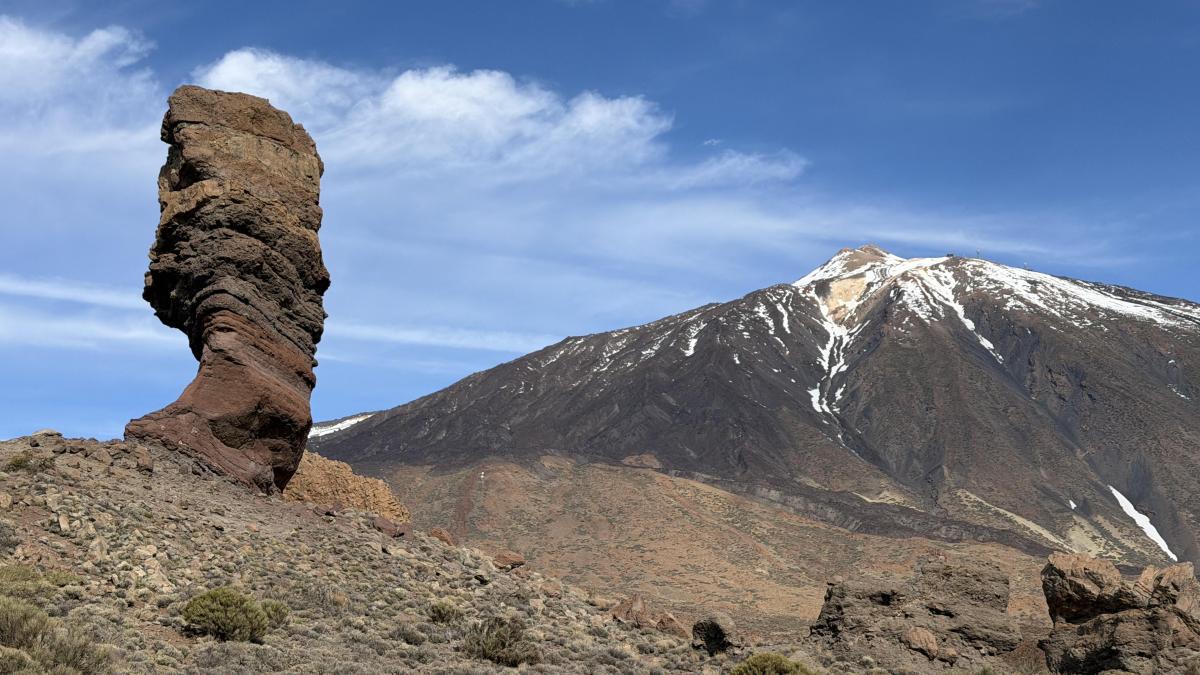
Teide Tremors Explained: Why 3,000 Quakes Aren't Imminent Danger
Recent reports of a seismic swarm beneath Tenerife, specifically around the majestic Teide volcano, have naturally sparked significant public interest and, for some, genuine alarm. With over 3,000 recorded tremors in a short period, it's easy to understand the preocupación Teide sismos – the concern regarding Teide's seismic activity. However, volcano monitoring experts are making a robust call for calm, explaining that while the numbers seem high, the characteristics of these quakes indicate no immediate threat of eruption. This article delves into the science behind these tremors, offering expert perspectives and valuable context to dispel unwarranted fears and provide a clear understanding of Teide's current state.
Understanding the Recent Seismic Swarm: What the Numbers Really Mean
Over the past few days, monitoring stations on Tenerife have indeed registered more than 3,000 earthquakes originating from the Teide volcanic complex. This intense burst of seismic activity, often referred to as a "seismic swarm," has been meticulously tracked by the Instituto Geográfico Nacional (IGN), Spain's leading authority on seismic and volcanic monitoring.
- Magnitude Matters: The vast majority of these tremors are extremely small, with magnitudes typically below 1.0 on the Richter scale. To put this into perspective, an earthquake needs to reach approximately 2.5 on the Richter scale to be felt by humans. Many of Teide's recent quakes are so faint they are difficult to detect even by sensitive scientific instruments, let alone perceptible by the island's residents or visitors.
- Depth is Key: Crucially, these seismic events are occurring at significant depths, primarily between 7 and 8 kilometers below the surface. Deep-seated tremors are generally less indicative of imminent magma ascent towards the surface compared to shallower quakes, which would signal magma breaking through the overlying rock closer to the vent.
- Diminishing Intensity: Experts note that the intensity and frequency of these tremors have shown signs of decreasing in recent hours, a common pattern for seismic swarms that often resolve without further escalation.
In essence, while the sheer number of quakes might sound alarming, their low magnitude, considerable depth, and diminishing trend are all factors that lead experts to conclude there is no immediate danger. This specific type of activity points to a different, less threatening geological process.
Expert Perspectives: Fluid Dynamics, Not Magma Ascent
The scientific community, particularly experts like Itahiza Domínguez, director of IGN Canarias, has been quick to provide reassurance. Domínguez explicitly states that these tremors are not indicative of an imminent eruption within weeks or months. The key to understanding this lies in differentiating between various types of subsurface activity.
Instead of magma pushing upwards, these tremors are primarily attributed to the movement and release of fluids and gases within the subsoil. Magma deep within the Earth contains dissolved gases. When there's minor destabilization or changes in pressure at depth, these gases can be liberated. As these fluids move and fracture tiny pockets of rock, they generate the low-frequency seismic signals detected by monitoring equipment. This process is often described as the volcano "breathing" or "degassing," a normal part of the life cycle of an active volcanic system.
"The magma contains gases, so the magma, when destabilized in some way, can release those gases, which are what can generate this type of low-frequency seismic activity," explains Domínguez.
This contrasts sharply with the signals that would precede an actual eruption. For an eruption to be considered imminent, scientists would expect to see:
- Stronger, Perceptible Earthquakes: Quakes with magnitudes of at least 2.5 on the Richter scale that are clearly felt by the population.
- Ground Deformation: Noticeable and rapid changes in the terrain, such as inflation (swelling) or lateral movement, indicating magma pushing upwards or sideways. Advanced GPS and tiltmeter networks would detect these deformations.
- Changes in Gas Emissions: Significant increases in the volume or composition of gases released from fumaroles or vents.
None of these critical indicators are currently present, reinforcing the experts' calm assessment.
Teide's Volcanic Nature: A History of Seismic Swarms
Tenerife is a volcanic island, and Teide itself is an active stratovolcano, albeit one that is heavily monitored. Its volcanic nature means that seismic activity, including swarms like the current one, is a regular and expected phenomenon. This isn't the first time Teide has shown such restlessness; previous seismic swarms have been recorded in 2016, 2019, 2022, and 2024, none of which led to an eruption.
The last eruption on the island of Tenerife occurred in 1909 (Chinyero volcano), more than a century ago. While the lack of instrumental records from much older periods means scientists don't have a complete picture of Teide's historical seismic patterns, the current data strongly suggests that these recent tremors fall within the expected behavior of a dynamic, but not immediately threatening, volcanic system. For a deeper dive into past events, you can explore Tenerife's Teide: History of Seismic Swarms & Eruption Risk Analysis.
Teide sits in a "central system," a geologically weakened zone that naturally makes it a focal point for volcanic processes. However, current activity is not concentrated in a way that suggests an eruption would necessarily occur from the main summit or any specific area. The widespread, deep nature of the current tremors indicates a more diffuse process rather than a focused magma ascent.
The Long-Term Picture: Managing Risk and Staying Informed
While the immediate danger is low, it's important to acknowledge Teide's long-term volcanic potential. According to Itahiza Domínguez, the probability of an eruption in the Teide complex within the next 50 years is approximately 35%. This figure, while seemingly high to some, is a geological probability based on historical data and volcanic models. It does not imply an imminent eruption. Instead, it underscores the need for continuous vigilance and robust monitoring systems, which are firmly in place.
For residents and tourists on Tenerife, the most crucial advice is to:
- Trust Official Sources: Always rely on information from official bodies like the IGN and local government emergency services. Avoid speculation from unofficial channels.
- Understand the Alerts: Volcanic alert levels are designed to communicate risk clearly. Familiarize yourself with these levels and what they signify. Currently, the alert level for Teide remains at "Green" (Normal), indicating no immediate risk.
- Observe Your Surroundings (But Don't Panic): While perceptible tremors are a key indicator, only sustained, strong quakes accompanied by official warnings should be a cause for concern. Visible ground changes are also a strong indicator, but these would be detected by monitoring systems long before they become obvious to the casual observer.
- Enjoy the Island: Tenerife remains a safe and vibrant destination. The sophisticated monitoring network ensures that any significant change in Teide's activity would be detected promptly, allowing ample time for official communication and, if necessary, response protocols.
Conclusion
The recent surge in seismic activity around Teide is a testament to the dynamic nature of an active volcanic system. While the sheer number of tremors might initially fuel the preocupación Teide sismos, a closer look at the scientific data reveals a reassuring picture. The small magnitude, significant depth, and fluid-driven nature of these quakes indicate a process of deep degassing and subsurface movement, not the imminent ascent of magma. Tenerife's world-class monitoring infrastructure, combined with the clear communication from experts like those at the IGN, provides the necessary assurances that the island remains safe. While Teide continues its long-term volcanic "breathing," there is no reason for immediate alarm, and residents and visitors alike can continue to enjoy the beauty of this unique island.