Tenerife's Teide: Unpacking the History of Seismic Swarms and Eruption Risk
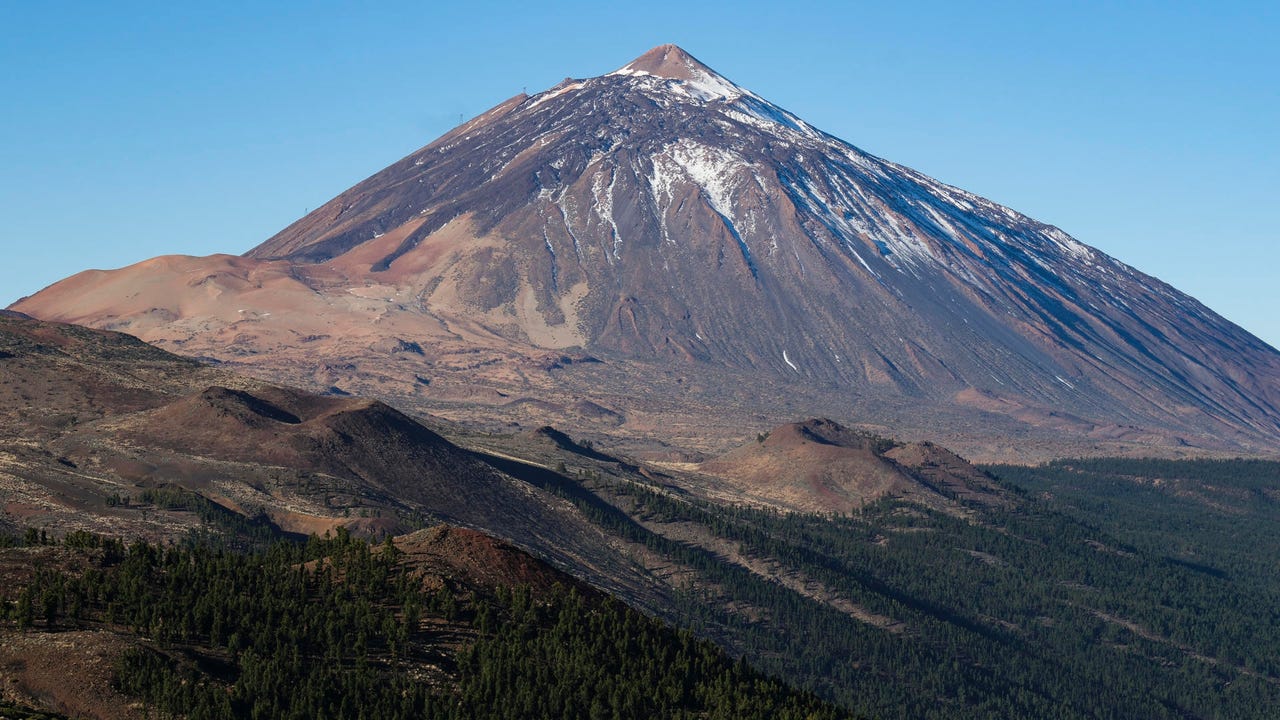
Mount Teide, the majestic stratovolcano dominating the Canary Island of Tenerife, is a breathtaking natural wonder and a potent symbol of the island's volcanic origins. For centuries, its imposing presence has captivated visitors and residents alike. However, recent seismic activity has naturally sparked a renewed focus on its volcanic nature, giving rise to what can be termed preocupación Teide sismos – a concern among the population regarding Teide's tremors.
Over a short period, reports of thousands of low-magnitude earthquakes beneath the island have circulated, raising questions about Teide's stability and potential eruption risk. While the sheer number of tremors can seem alarming, a closer look at the scientific explanations and historical context, as provided by experts from institutions like the Instituto Geográfico Nacional (IGN) Canarias, offers a crucial perspective. This article delves into the history of Teide's seismic swarms, analyzes the current risk, and provides valuable insights into what these tremors truly signify for Tenerife.
Understanding Teide's Recent Seismic Activity
In a recent concentrated period, Tenerife experienced a significant seismic swarm, with reports detailing anywhere from 2,500 to over 3,000 micro-earthquakes detected beneath the island within just a few days. This surge in activity naturally caught the attention of residents and authorities, igniting the aforementioned preocupación Teide sismos.
However, the nature of these seismic events is key to understanding the current situation. Itahiza Domínguez, director of IGN Canarias, explains that these tremors are typically "very, very small, of magnitude less than one, not perceptible by the population and in some cases difficult to perceive even by sensors." They are also predominantly deep, localized at depths of between 7 and 8 kilometers beneath the surface, with some activity observed in the western zone of the island. Crucially, experts emphasize that these events are not a direct indication of an imminent eruption.
The scientific explanation for this type of activity often points to the movement of fluids, rather than the ascent of magma towards the surface. As Domínguez elaborates, "Magma contains gases, so when magma becomes destabilized in some way, it can release these gases, which can generate this type of low-frequency seismic activity." This process, known as 'degasification,' involves gases and hydrothermal fluids moving through the subsurface, breaking rock as they go, thus creating these small, deep tremors. This is a common phenomenon in volcanic systems and doesn't necessarily mean magma is forcing its way upwards.
Furthermore, experts have noted that the intensity of these recent tremors has often decreased shortly after the initial surge, a pattern that further supports the assessment of a non-critical situation. This reduction in intensity, coupled with their low magnitude and depth, is why the IGN and other scientific bodies maintain a calm outlook, advising against undue alarm.
A Historical Perspective: Teide's Volcanic Past and Present Monitoring
Teide is an active volcano, and seismic activity is a natural part of its life cycle. The last eruption on the Teide complex itself occurred over 100 years ago. While this might seem like a long time, in geological terms, it's merely a blink. The absence of very ancient instrumental records, as Domínguez points out, means "we don't know if we had it previously because we didn't have instruments. So, for geological purposes, we don't know if this is something that usually occurs on the island or not." This historical uncertainty underscores the vital role of modern, sophisticated monitoring systems.
Fortunately, contemporary monitoring technology provides unprecedented insights. The recent swarm is not an isolated incident; similar seismic swarms have been recorded in Tenerife in 2016, 2019, 2022, and 2024. Significantly, none of these previous episodes resulted in an eruption. This recurring pattern, where low-magnitude, deep tremors occur without leading to a surface event, provides a strong basis for the experts' current assessment that the immediate risk of an eruption is very low.
Tenerife, like all the Canary Islands, is inherently volcanic. Teide itself sits within a "weakened central system" – a geological zone more prone to such activity. This natural characteristic makes it a location where the earth's internal processes are more expressed. The consistent monitoring by the IGN, using an array of seismographs, GPS stations, and other sensors, allows scientists to differentiate between routine volcanic "breathing" and actual precursors to an eruption.
While the short-term eruption risk is deemed low, it's important to understand the broader geological context. Itahiza Domínguez states that "the probability of an eruption in the next 50 years is approximately 35%." This long-term probabilistic forecast is based on historical data and geological models and highlights the dynamic nature of living on a volcanic island. It's a reminder of Teide's active status but shouldn't be confused with an imminent threat.
Navigating Eruption Risk: What Experts Look For
When volcanic systems show signs of unrest, volcanologists look for specific, well-defined indicators that differentiate between typical background activity and genuine precursors to an eruption. The recent seismic swarm, despite its high numbers, notably lacks these critical markers, which is why the preocupación Teide sismos remains largely a matter of scientific observation rather than immediate public alert.
The primary indicators that would signal a heightened risk of eruption include:
- Perceptible Earthquakes: Unlike the recent micro-tremors, a true escalation towards an eruption would likely be preceded by earthquakes strong enough to be felt by the population, typically magnitudes of 2.5 on the Richter scale or higher. These would also tend to be shallower, indicating magma movement closer to the surface.
- Ground Deformation: A key sign of magma pushing upwards is rapid and measurable deformation of the ground. This could manifest as swelling, tilting, or shifts in the landscape, detectable by sophisticated GPS and inclinometer networks. Such movements would indicate magma moving horizontally or vertically towards the surface.
- Significant Gas Emissions: While degasification is normal, a dramatic and sustained increase in the volume or composition of volcanic gases released from fumaroles or vents can be a red flag.
The absence of these indicators in the current situation is paramount. The detected tremors are not resulting in perceptible ground deformation, nor are they associated with a significant increase in felt earthquakes. This confirms the assessment that the current activity is not indicative of magma rising towards an eruption within a timeframe of weeks or months.
For a deeper dive into why the recent high tremor count doesn't signify immediate danger, consider reading our related pieces: Teide's 3,000 Sismos: Experts Call for Calm in Tenerife and Teide Tremors Explained: Why 3,000 Quakes Aren't Imminent Danger.
Practical Insights for Residents and Visitors
Living on or visiting a volcanic island like Tenerife means coexisting with a dynamic natural environment. While the recent preocupación Teide sismos is understandable, here are some practical insights:
- Trust Official Sources: Always rely on information from official scientific bodies like the Instituto Geográfico Nacional (IGN) Canarias and local government agencies. These institutions have the expertise, instrumentation, and protocols to accurately assess and communicate risk.
- Stay Informed, Not Alarmed: Differentiate between routine volcanic activity and actual eruption alerts. Regular seismic swarms are part of Teide's natural behavior. An imminent eruption would be preceded by clear, escalating signals that experts would quickly identify and communicate.
- Understand Volcanic Landscapes: Appreciate that volcanic islands are continuously shaped by geological forces. Teide's grandeur is a direct result of these processes. Being aware of this context helps in understanding why such seismic events occur.
- Modern Monitoring is Robust: Tenerife boasts a highly sophisticated and continuously improving volcanic monitoring network. Scientists are constantly vigilant, analyzing data 24/7 to detect any significant changes. This advanced capability provides a strong safety net for the island's residents and visitors.
Conclusion
The recent seismic swarm around Tenerife's majestic Teide has undeniably sparked preocupación Teide sismos among the island's population and observers worldwide. However, a comprehensive analysis of the scientific data, historical context, and expert opinions strongly suggests that there is no imminent risk of an eruption. The thousands of detected tremors are primarily low-magnitude, deep, and characteristic of fluid movements within the volcano, rather than the ascent of magma towards the surface.
With a robust and vigilant monitoring system in place, experts from the IGN Canarias provide continuous assurance that the key indicators for an impending eruption – such as perceptible earthquakes or significant ground deformation – are currently absent. While Teide remains an active volcano with a long-term probability of eruption, its current seismic behavior aligns with patterns observed in previous, non-eruptive swarms. By staying informed through official channels and understanding the natural dynamics of this incredible volcanic landscape, both residents and visitors can continue to appreciate Tenerife's unique beauty with confidence and calm.